I had arranged to help out at an info stand. For a cause close to my heart. An event, lots of people, I’m in.
I was super motivated. The right clothes on, over 30 degrees, ready to roll up my sleeves. And to be honest: I also wanted to make an impression. I was right in the middle of job-application mode, after all. Show who I am.
My contact person wasn’t there. She was supposed to come later. So there I stood with three people I didn’t know.
And then my brain switched on. I organised events for years. I know how flyers get left lying around instead of flying off the table. How to get people talking. I wanted to share that. Right away. All of it.
The answer came fast, and it was harsh. From the very person who was in charge of the stand. An autistic person.
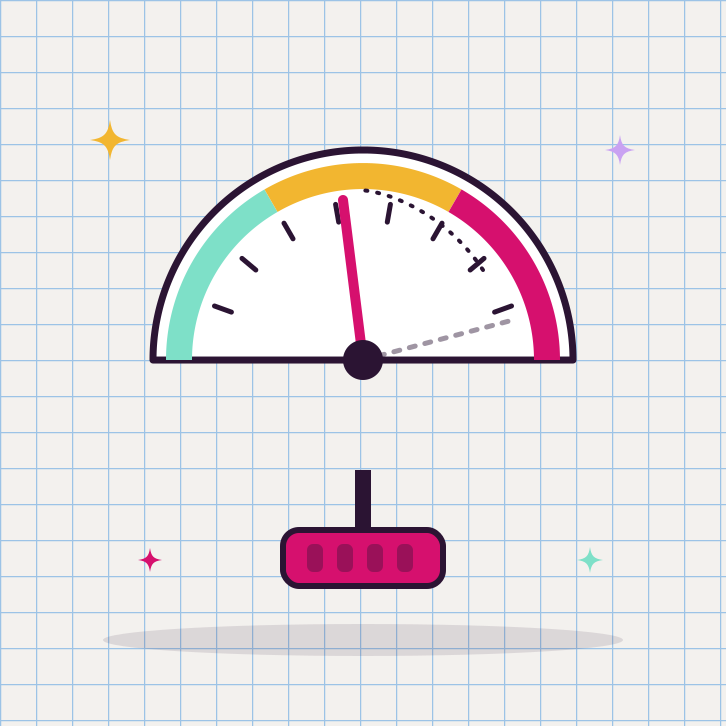
Before: everything, right nowToday: with a brake pedal
Two nervous systems on alert. And neither of us was being mean.
My side
I meant well. I really did. But when I’m on fire for something, I go full throttle. Then I steamroll people. Not out of ill will. I don’t want to take over. I just want to pass on what I’ve learned.
It’s not the first time this has happened to me. And the rejection hit hard. It took me a long time to get over it.
The other side
At some point I tried to see the situation through different eyes.
That person was responsible for the stand. They had a plan, and the plan gave them security. Then the contact person was missing. It was hot, loud and crowded. And suddenly a stranger turned up and wanted to do everything differently.
What I meant as help may have come across like this: “Your plan is wrong.” For many autistic people, a moment like that is pure stress. And many then say a clear no, without any padding.
For me, with my ADD radar for rejection, it felt like a punch.
What I’ve learned over time
Since then I’ve read a lot, listened and thought about it. One image has stuck with me.
There’s a boundary. I see it clearly in front of me. And still I take a run-up, drive right over it, slam on the brakes, turn around and ask: “Was there a boundary?” Typical ADD for me: do first, notice later.
Many autistic people I’ve met see the same boundary from far away. They warn you long before: “There’s a boundary, we don’t cross it.” Rules give them something to hold on to.
And now imagine the two of us standing together at that boundary.
Then there’s language. I talk a lot, fast and with my hands and feet. The person opposite me may read facial expressions, tone of voice and hints very differently from me. We’re both emotional, just in different ways. And then it clashes.
By the way, there’s a term for this: the “double empathy problem”. It means that neither side is doing it wrong. Two ways of communicating simply don’t fit together automatically. The misunderstanding happens in between, not in one person.
A first study from Edinburgh has even looked at autism, ADHD and neurotypical people together. Autistic people adapted most strongly to other autistic people in conversation, and least to neurotypical people. And people with ADHD adapted more to autistic partners than to other people with ADHD. So far this is only a first hint. But it fits what I experienced.
Out of the box
I know, this is putting people in boxes. Autistic people would probably describe themselves very differently. The spectrum is huge, with autism just as with ADHD and ADD. Not every woman with ADD races across boundaries. And not every autistic person sticks to every rule.
That’s why I wish for something other than boxes: take a look at the person in front of you first. And then ask questions.
What I would do differently today
Arrive first, then contribute. The first time, listen and go along.
Ask instead of show. “How did you plan it? Where can I help?”
Ask for a specific task. Hand out flyers, talk to people, hold the table.
Bring ideas up later. Calmly, not in the middle of the hustle.
Leave the job applicant at home. I don’t have to prove myself.
Understanding doesn’t mean swallowing it
The rejection hurt, and it’s allowed to. Even though today I understand what happened and how I could have handled it better.
Understanding doesn’t mean thinking everything was fine. But it helps me take it less personally.
Two operating systems met. Mine wanted full throttle, the other one needed something to hold on to.
My enthusiasm isn’t a flaw. Sometimes it just needs a brake pedal. Do you know encounters like this? And which side of the boundary were you on? Write to me.
Who’s writing here? My glitter self: over 50, on my way to an ADHD/ADD assessment, and mum of a daughter with ADD. Here I share what I experience and what helps me. More about me
 DE
 EN
 FR